A child can pass the eye chart on the wall and still have a vision problem that is undermining their schoolwork every single day. That surprises a lot of parents. We tend to think of vision as one thing, the ability to read a row of letters from across the room. But seeing clearly at a distance is only part of how a child’s eyes support learning, and some of the problems that matter most for the classroom are exactly the ones a quick check can miss.
As the school year approaches, it is worth understanding what these overlooked issues are and how they quietly affect a child’s grades. A child who is struggling because of an undetected vision problem is not being lazy or difficult. They are working harder than their classmates just to keep up, and often no one knows.
Why Passing the Eye Chart Is Not the Whole Story
The familiar eye chart measures distance vision, how clearly a child sees something far away. That is genuinely important, but most schoolwork happens up close, at the desk and on the page. A child can have perfect distance vision and still struggle with the near vision skills that reading and writing demand. Because the standard chart does not measure those skills, a child can pass it and still have real difficulty doing close work for any length of time.
This gap is where so many learning related vision problems hide. A parent hears that their child passed the vision check at school and reasonably assumes everything is fine. Meanwhile the child continues to struggle with reading, and the cause sits unexamined. Understanding that distance vision and learning vision are not the same thing is the first step to catching what gets missed.
The Problems That Quietly Affect Grades
Some children can see clearly but have trouble keeping their eyes focused comfortably on near work, which makes reading tiring and hard to sustain. Others have difficulty with how their two eyes work together, which can make words appear to move or blur on the page during reading. Still others struggle with tracking, the ability to move the eyes smoothly across a line of text, causing them to lose their place, skip words, or reread lines.
None of these necessarily show up on a basic distance check, yet all of them make schoolwork harder. A child with one of these issues may avoid reading, tire quickly, make careless errors, or simply fall behind, and the adults around them often reach for other explanations. The behavior gets labeled as inattention or a learning struggle, when the underlying cause is the eyes.
How These Issues Get Mistaken for Something Else
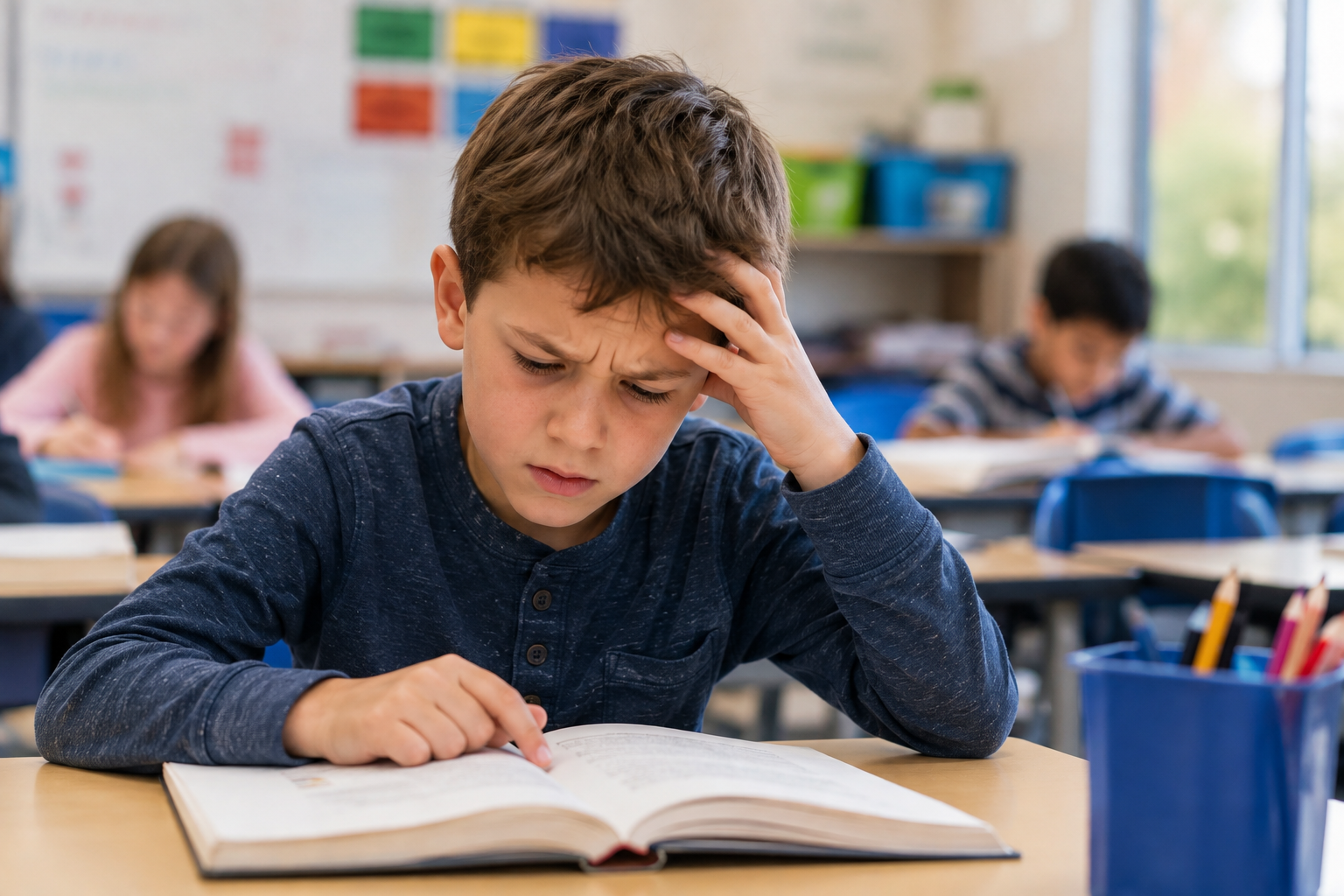
This is the heart of the problem. A vision issue that affects learning rarely announces itself as a vision issue. It shows up as a child who avoids reading, who cannot sit still during deskwork, who loses focus, or who seems bright in conversation but struggles on the page. These are easy to misread as behavior or ability problems, and a child can carry that mislabel for years.
Catching the real cause matters enormously, because a vision related struggle is often very addressable once it is correctly identified. A thorough screening that looks beyond distance vision, followed by a professional eye exam when needed, can reveal what a basic check misses. Vizavance built its screening process around catching the signs that affect learning, not just distance sight, which you can read more about along with the organization’s mission to support children’s education through vision.
Give Every Child a Fair Chance to Learn
Before assuming a struggling child is simply not trying or not capable, it is worth ruling out a vision problem, including the kind that a quick eye chart cannot catch. A child who cannot comfortably see their work is fighting an invisible headwind, and no amount of effort fully overcomes it. Identifying and addressing the issue can transform how a child experiences school.
As families head into a new school year, this is a good moment to look beyond the basic vision check and make sure nothing is being missed. Vizavance is dedicated to making sure Oklahoma children do not slip through these gaps, and parents, teachers, and schools can learn more about screenings and how to get involved through our resources. Every child deserves a fair chance to learn, and clear vision is part of that chance.
Frequently Asked Questions
Can a child pass an eye chart test and still have a vision problem?
Yes. The standard eye chart measures distance vision, how clearly a child sees far away, but most schoolwork happens up close. A child can have excellent distance vision and still struggle with the near vision skills that reading and writing require, such as focusing comfortably on close work, coordinating both eyes, or tracking across a line of text. Because the basic chart does not measure these, a child can pass it and still have real difficulty.
What vision problems affect a child’s reading and grades?
Several that a basic distance check may not catch. Some children have trouble keeping their eyes focused comfortably on near work, making reading tiring. Others struggle with how their two eyes work together, which can make words blur or appear to move. Some have difficulty tracking smoothly across a line, causing them to lose their place or skip words. Each of these makes schoolwork harder even when distance vision is fine.
Why are vision problems mistaken for behavior or learning issues?
Because a learning related vision problem rarely looks like a vision problem. It often shows up as a child who avoids reading, cannot sit still during deskwork, loses focus, or seems capable in conversation but struggles on the page. These are easily misread as inattention or a learning difficulty. As a result, a child may carry the wrong label for years while the real cause, an issue with the eyes, goes unexamined.
How can I tell if my child has an undetected vision problem?
Watch for signs such as avoiding reading, tiring quickly during close work, losing their place or skipping words, frequent careless errors, or struggling on the page despite seeming bright otherwise. These can point to vision issues that a basic eye chart misses. A thorough screening that looks beyond distance vision, followed by a professional eye exam when indicated, can identify the real cause so it can be addressed.
How does Vizavance help catch these overlooked vision problems?
Vizavance designs its screenings to look beyond basic distance vision toward the signs that affect a child’s ability to learn, then helps connect families to the care they need. As an Oklahoma nonprofit focused on advancing children’s education through better vision, it has screened hundreds of thousands of children, helping catch problems that standard checks can miss. Parents, teachers, and schools can learn about the screening process and how to get involved through the organization’s resources.