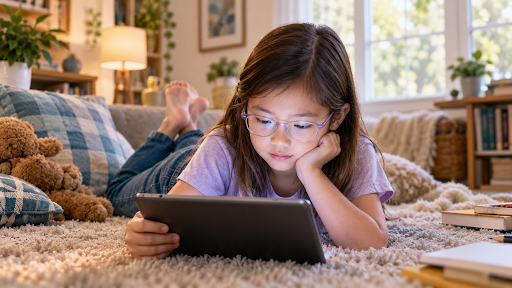
Winter break has a way of turning into screen break. School is out, cold weather keeps everyone inside, and the gifts under the tree often include a new tablet, phone or game console. By the second week, plenty of parents are watching their kids stare at a screen from a few inches away and wondering whether all of this is doing lasting harm.
The answer is more reassuring than most parents expect, with a few important caveats. Screens can cause real discomfort, and the way children use them is linked to a growing problem with nearsightedness. Here is what the research actually says, the simple habits that help and the signs that mean it’s time to have your child’s vision checked.
What Screens Do to Kids’ Eyes in the Short Term
Long stretches of screen time can lead to what eye doctors call digital eye strain. Kids may complain of dry or itchy eyes, blurry vision or headaches, while younger children often just rub their eyes or get cranky without knowing why. Part of the reason is that people tend to blink less while they concentrate on a screen, and blinking is what keeps the surface of the eye moist.
Those symptoms are uncomfortable, but they are not a sign of injury. According to the American Academy of Ophthalmology’s guidance on screen use for kids, the symptoms of digital eye strain are temporary, and no permanent damage is being done to the eyes. Rest, regular breaks and a few changes to how screens are used usually make them go away.
The Bigger Concern Is Nearsightedness
The more important long-term issue is myopia, or nearsightedness, which makes faraway objects look blurry. Myopia has been rising around the world, and a widely cited 2016 study in the journal Ophthalmology projected that about half of the world’s population, nearly 4.8 billion people, could be nearsighted by 2050. When nearsightedness starts early in childhood, it often keeps getting worse through the growing years.
Screens are only part of the story. Researchers point to long hours of close-up focus, whether that’s a tablet, a book or homework, combined with too little time outdoors. A child who spends the whole break indoors on a device is missing out on one of the simplest ways to protect their vision.
Why Time Outdoors Matters So Much
Some of the strongest evidence for protecting children’s eyes comes from simply sending them outside. In a three-year trial in China published in JAMA in 2015, schools that added one 40-minute outdoor class to each school day saw 30.4 percent of children develop nearsightedness, compared with 39.5 percent at schools that did not. The AAO also notes that spending time outdoors, especially in early childhood, can slow the progression of nearsightedness.
Scientists are still studying exactly why it works, and natural daylight and looking at faraway objects both seem to play a role. You don’t need perfect weather to get the benefit. A walk around the neighborhood, an afternoon at the park or a bike ride on a mild December day all count.
Do Kids Need Blue Light Glasses?
Blue light glasses are heavily marketed to parents, but the AAO does not recommend blue light glasses or any special eyewear for computer use. According to the Academy, there is no scientific evidence that the light coming from screens damages the eyes. If you’re worried about your child’s vision, an eye exam is a far better use of that money.
Where screens really can cause trouble is sleep. The AAO notes that screen use too close to bedtime can harm sleep quality, and kids on a winter break schedule are already prone to staying up late. Putting phones and tablets away well before bed, and keeping them out of bedrooms overnight, helps everyone get back on track before school starts again.
Simple Screen Habits for Winter Break
A few small changes go a long way. Many eye doctors recommend the 20-20-20 rule: every 20 minutes, look at something about 20 feet away for at least 20 seconds. For younger kids, turn it into a game, such as spotting something out the window, so the break actually happens.
Distance and setup matter too. The AAO suggests keeping the screen about an arm’s length away and at a slight downward angle from your child’s face, which is easier on the eyes than a tablet held up close. Match the screen’s brightness to the room, remind kids to blink and take real breaks, and consider a family media plan that sets clear expectations for when and where screens are used during the holidays.
Signs Your Child Should Have Their Eyes Checked
Good screen habits can’t fix a vision problem that’s already there. Watch for squinting, sitting very close to the TV, holding devices unusually close, frequent eye rubbing, headaches after reading or screen time, tilting the head or covering one eye to see better. A child who suddenly avoids reading or keeps losing their place on the page may also be struggling to see clearly.
Children rarely say they can’t see well. They have no idea what clear vision is supposed to look like, so blurry simply seems normal to them. That is exactly why regular screenings matter, because they catch problems a parent might never notice at home.
Free Vision Screening in Oklahoma
Vizavance, formerly Prevent Blindness Oklahoma, has been protecting children’s sight since 1965. We provide free vision screenings in public and private schools, preschools, Head Start programs and daycares across the state, and every screening is carried out by state-certified screeners. When a child does not pass, parents receive a form explaining the result, a referral letter goes to the school, and families then call an optometrist to schedule a full eye exam.
Cost should never stand between a child and clear vision, which is why financial assistance for eye exams and glasses is available for families who need it. You can see how our free vision screening in Oklahoma works from start to finish, and learn more about Vizavance and our work with schools and families.
Frequently Asked Questions
Can too much screen time permanently damage a child’s eyes?
According to the American Academy of Ophthalmology, the symptoms of digital eye strain, such as dry eyes, blurry vision and headaches, are temporary and do not cause permanent damage. The bigger long-term concern is nearsightedness, which is linked to long hours of close-up focus and too little time outdoors.
Does screen time cause nearsightedness in kids?
Screens aren’t the only factor, but long periods of close-up work combined with little time outside are associated with nearsightedness. Research shows that more time outdoors can lower the chance of a child becoming nearsighted, which is why balancing screens with outdoor play matters.
Should my child wear blue light glasses for screens?
The AAO does not recommend blue light glasses or special eyewear for computer use, and it says there is no scientific evidence that screen light damages the eyes. Limiting screens before bedtime is a better use of effort, since late screen use can affect sleep.
How far away should my child hold a tablet or sit from a screen?
The AAO suggests keeping screens about an arm’s length away and at a slight downward angle. Regular breaks to look at something in the distance also help relax the eyes during long sessions.
How can my child get a free vision screening in Oklahoma?
Vizavance provides free vision screenings in public and private schools, preschools, Head Start programs and daycares across Oklahoma. If you’re not sure whether screenings are scheduled at your child’s school or childcare center, ask the staff to reach out to Vizavance. Children who do not pass are referred for a full eye exam, and financial assistance is available for families who need it.